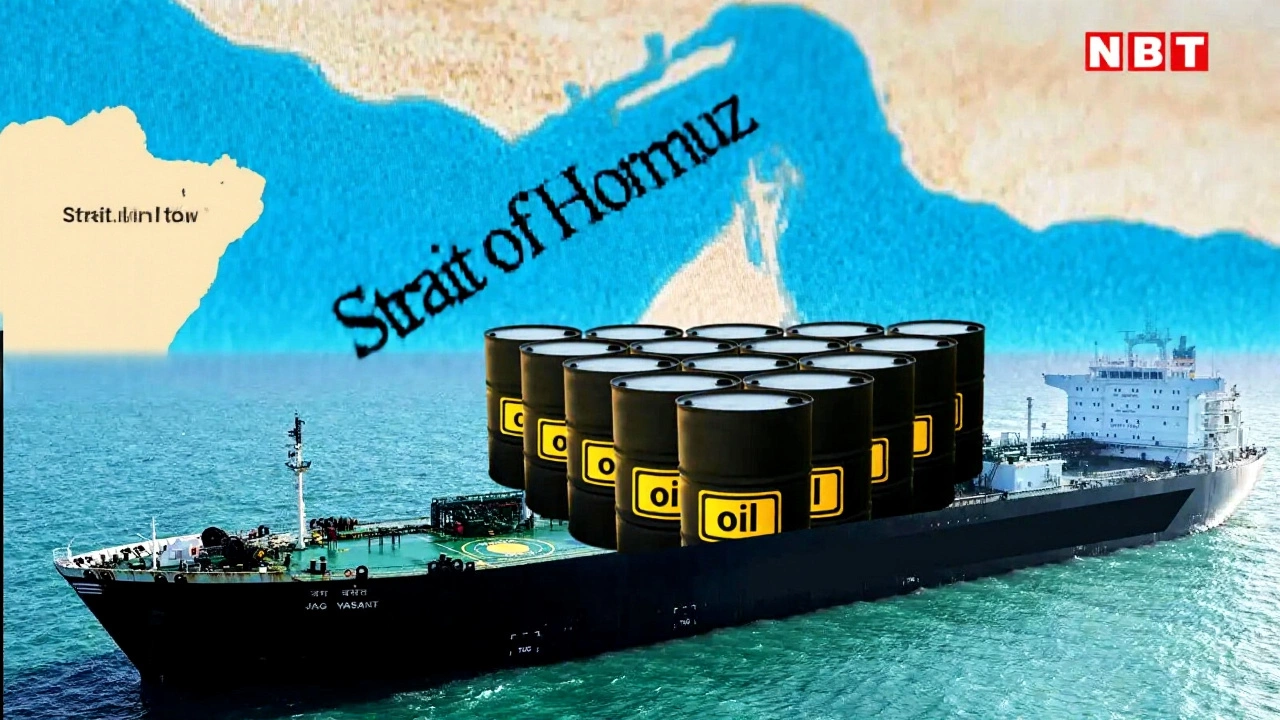
Global oil markets hit the panic button this week after the United States Navy announced preparations to block the Strait of Hormuz, a critical chokepoint for global energy supplies. The move, triggered by failed negotiations between Washington and Tehran, sent shockwaves through trading floors worldwide. Brent crude, the international benchmark, skyrocketed past $100 a barrel in early trading, while West Texas Intermediate (WTI) surged nearly 9%. Here’s the thing: it wasn’t just the blockade that rattled investors—it was the confusing signal from the White House.
A Perfect Storm in the Gulf
The tension didn't come out of nowhere. For two weeks, a fragile ceasefire had held, allowing oil prices to dip slightly—Brent fell 0.75% on Friday alone. But then came the news. With talks collapsed, the US military began positioning assets to restrict Iranian oil exports. Suddenly, the market remembered why the Strait of Hormuz matters: roughly 20% of the world's oil supply passes through those narrow waters every day. When you threaten to cut off that flow, prices don't just rise; they explode.
By midday, Brent crude was trading at $101.60 per barrel, up 6.72%, while WTI climbed to $104.20, an 8.61% jump. It was a chaotic scene. Traders who had been hedging against lower prices suddenly scrambled to buy futures, fearing a prolonged disruption. The volatility was stark. Just days earlier, analysts were discussing potential relief from de-escalation. Now, the focus shifted entirely to supply risk.
Trump’s Confusing Signals
Enter Donald Trump, President of the United States. His comments did little to calm the nerves of global markets. On Sunday, he declared that the US Navy would enforce the blockade, aiming to halt Iranian oil sales. Yet, in the same breath, he suggested that oil and gas prices might "go down or go up" in the near future. Turns out, ambiguity is expensive.
Market experts were baffled. How can prices stabilize when the President offers no clear direction? One analyst noted that such mixed messages create a vacuum where fear fills the gap. Trump also hinted that domestic midterm elections in November could influence policy, adding another layer of uncertainty. Meanwhile, Iran warned that prices could climb to $140 a barrel if the blockade persists—a threat designed to pressure Washington but which only added fuel to the speculative fire.
Military Maneuvers and Diplomatic Secrets
Behind the scenes, the operation was intensifying. Reports indicate that US Central Command established two containment rings around the strait. An inner ring focused on the entrance near Hormuz Island, while an outer ring stretched across the Gulf of Oman and the Arabian Sea. High-altitude MQ-4C Triton drones and satellites provided 24/7 surveillance, ensuring no tanker slipped through unnoticed.
Approximately 1,400 vessels were reportedly trapped in the region, unable to proceed safely. Ten US warships were deployed to intercept tankers heading toward or away from Iranian ports like Bandar Abbas and Chabahar. This "search and seizure" tactic marked a significant escalation. Adding to the intrigue, Reuters reported that the US State Department sent a secret diplomatic cable to countries worldwide. While the contents remain undisclosed, the mere existence of a covert message suggests high-stakes diplomacy is underway.
Impact on Global Consumers
The ripple effects are already being felt at the pump. In New Delhi, India, petrol prices stood at ₹94.77 per liter, with diesel at ₹87.67. While these figures reflect local taxes and subsidies, any sustained spike in global crude costs will inevitably push retail prices higher. For emerging economies heavily reliant on imports, this volatility poses a severe economic challenge. Inflation fears are rising, and central banks may need to reconsider their interest rate policies.
Interestingly, some reports suggest a brief reprieve. After rumors circulated that the Strait might reopen, Brent crude dropped 9% to $90.38 a barrel—the lowest level since March 10. However, this relief appears temporary. As long as the threat of conflict looms, prices will remain tethered to geopolitical headlines rather than fundamental supply and demand dynamics.
What Comes Next?
The situation remains fluid. China and Russia have signaled they won't sit idly by, potentially complicating US efforts. If diplomatic channels fail completely, we could see further military engagements under operations like "Epic Fury." For now, traders are watching every word from Washington and Tehran. The key question isn't just whether the blockade will hold, but how long the global economy can withstand such uncertainty. Keep your eyes on the November midterms—they might just be the next catalyst for change.
Frequently Asked Questions
Why is the Strait of Hormuz so important?
The Strait of Hormuz is a narrow waterway connecting the Persian Gulf to the Gulf of Oman. Approximately 20% of the world's total oil consumption passes through it daily. Any disruption here directly impacts global energy security and pricing.
How much did oil prices rise?
Brent crude surged over 8% in early trading, breaking the $100 barrier to reach $101.60 per barrel. WTI crude also jumped significantly, rising 8.61% to $104.20 per barrel, reflecting intense market anxiety.
What did Donald Trump say about oil prices?
Trump stated that prices could either "go down or go up," creating confusion among investors. He confirmed the naval blockade aimed at stopping Iranian oil sales but offered no clear timeline or resolution strategy.
Is the blockade currently active?
Yes, the US Navy has initiated enforcement measures, including drone surveillance and ship interceptions. Reports indicate that around 1,400 vessels are affected, with strict search-and-seizure protocols in place near Iranian ports.
Will this affect gas prices in my country?
Likely yes. Global crude price spikes typically translate to higher retail fuel costs within weeks. Countries dependent on imported oil, like India, may see immediate increases at the pump, impacting transportation and inflation rates.