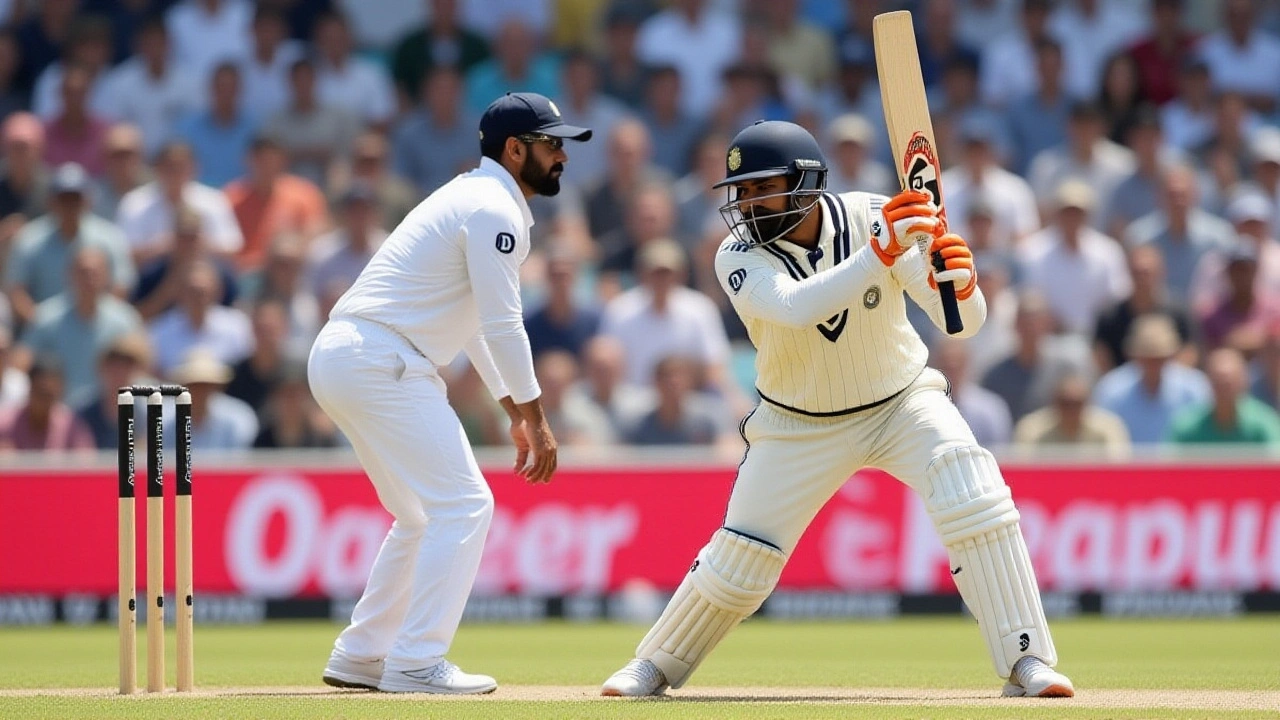
On November 15, 2025, Eden Gardens in Kolkata became the stage for one of the most dramatic turnarounds in recent Test cricket history. India, chasing momentum after a promising start, collapsed to 189 all out in their first innings — only to see South Africa claw back with a devastating spin attack, eventually sealing a 30-run win on Day 3. It was their first Test victory in India since 2010 — a 15-year drought finally broken.
Spin Turns the Tide at Eden Gardens
What began as a day of cautious batting for India turned into a slow-motion implosion. At lunch, India sat at 138/4, with Ravindra Ashwin Jadeja on 11 and debutant wicketkeeper Dhruv Chand Jurel on 5, looking composed. The partnership between KL Rahul (25) and Washington Sundar (22) had steadied the ship, adding 50 runs in 152 balls. But everything changed when Shubman Gill retired hurt at 79/2. The momentum shifted like a tide turning — and South Africa’s spinners smelled blood.
By the time India reached 189, the pitch had become a minefield. Keshav Maharaj Harmer was the architect of the collapse, taking 4/47 with his left-arm orthodox spin. His delivery to dismiss Mohammed Siraj — a short-of-length ball that jagged back, beat the outside edge, and crashed into the stumps — was the final blow. Siraj, out for 1, was the eighth wicket. India had lost their last six wickets for just 32 runs. The pitch, initially offering some seam movement, had turned into a spinner’s paradise by the afternoon.
South Africa’s Second Innings: A Fight Back From the Brink
After being bowled out for 159 in their first innings, South Africa had just a 63-run lead. But their second innings told a different story. At 25/1, they looked vulnerable. Then Ravindra Jadeja struck — four wickets in 12 overs, including the crucial catch of Aiden Markram (4), taken by Jurel off a sweeping mishit. Wiaan Mulder and Markram had rotated strike with precision, but Jadeja’s control and Kuldeep Yadav’s variations (2/38) dismantled the middle order.
By the time bad light halted play at 93/7 in 35 overs, South Africa’s captain Temba Bavuma was unbeaten on 29, with Corbin Bosch (1*) at the crease. The pitch was gripping, turning sharply, and the Indian spinners were relentless. But the real story was the South African resilience. They didn’t just survive — they seized the moment.
Why This Win Matters
South Africa hadn’t won a Test in India since 2010. That’s 15 years. Fifteen years of near-misses, of collapses under pressure, of Indian spinners dominating on home soil. This win wasn’t just about runs or wickets — it was psychological. Bavuma’s calm leadership, Harmer’s control under pressure, and Marco Jansen’s late-order aggression (3/34) showed a team that had finally learned how to win in India.
For India, the collapse was a wake-up call. Despite a strong top order, their middle and lower order — especially the tail — folded against quality spin. The pitch, prepared by the Cricket Association of Bengal, offered more turn as the match progressed, favoring the visitors’ spinners who had trained for these conditions. Experts noted that while India’s spin duo of Jadeja and Kuldeep were effective, they lacked the same control under pressure that Harmer displayed.

What’s Next?
With the series tied 1-0 after this Test, the focus now shifts to the second Test in Delhi. Will India adjust their batting approach against spin? Can South Africa replicate this performance on a flatter track? And will Jurel, who showed promise with both bat and gloves, earn a permanent spot in the XI? The answers will define the series.
For now, Eden Gardens will be remembered not for a dominant Indian innings, but for a quiet, determined South African side that refused to be beaten — and made history.
Frequently Asked Questions
How did the pitch conditions influence the match outcome?
The pitch at Eden Gardens started with some seam movement but deteriorated significantly after Day 1, offering increasing turn and variable bounce by Day 2. South Africa’s spinners, particularly Keshav Maharaj Harmer, exploited this perfectly, while India’s batsmen struggled to adjust. The pitch’s behavior favored patience and shot selection — qualities South Africa demonstrated better under pressure.
Why was Keshav Maharaj Harmer so effective in this match?
Harmer’s accuracy, subtle variations in pace, and ability to land the ball on the seam allowed him to exploit the turning pitch without overpitching. His 4/47 included key wickets of Rahul and Siraj, and he consistently forced India into defensive shots. Unlike some spinners who rely on flight, Harmer used the rough outside the right-hander’s off-stump — a tactic that paid off repeatedly.
What role did Dhruv Chand Jurel play beyond keeping wickets?
Jurel, making his Test debut, not only held his nerves behind the stumps but also contributed crucial runs — scoring 5 at lunch and later taking a stunning catch to dismiss Aiden Markram. His ability to handle Jadeja’s turn and the movement off the pitch impressed observers. His aggressive cut shot during India’s innings also signaled potential as a future middle-order option.
How significant is South Africa’s 15-year win drought in India ending?
South Africa’s last Test win in India was in 2010 at Chennai. Since then, they’ve lost 11 Tests and drawn 3, often collapsing under Indian spin. This victory breaks a psychological barrier — proving they can now compete on the most hostile batting surfaces. It also elevates their status as a genuine Test contender, not just a team that performs well abroad.
What does this mean for India’s Test team ahead of the 2026 World Test Championship final?
India’s middle-order fragility against quality spin was exposed. With the WTC final in mind, they’ll need to address how their tailenders handle turning tracks. The retirement of Shubman Gill due to injury also raises concerns about depth. If India can’t stabilize against spin at home, their chances in overseas Tests — especially in England and Australia — could be in jeopardy.
Who were the standout performers on both sides?
For South Africa, Keshav Maharaj Harmer (4/47) and Temba Bavuma (29*) were the backbone, while Marco Jansen’s 3/34 provided crucial breakthroughs. For India, Ravindra Jadeja’s 4/43 with the ball and his calm leadership were highlights, but his 11 not out with the bat didn’t prevent the collapse. Dhruv Jurel’s debut showed promise, but India’s top order failed to capitalize on a strong start.